
How to eat for a more comfortable period: iron, protein, and fiber
Before and during a period, the body may feel more tired, bloated, or drawn to sweet and salty foods. The goal of nutrition is not to restrict yourself, but to support steadier blood sugar, lower inflammatory load, and smoother recovery.
What to know
- Short-term appetite and weight changes often have several causes.
- Flexible, adequate nourishment is safer than extreme restriction.
- Adjust movement to symptoms and energy, not a rigid cycle rule.
Start with the pattern
Before and during a period, the body may feel more tired, bloated, or drawn to sweet and salty foods. The goal of nutrition is not to restrict yourself, but to support steadier blood sugar, lower inflammatory load, and smoother recovery.
Use the ideas below as general health context. Your own baseline, symptoms and daily functioning matter more than any single date, score or wearable sample.
Period nutrition is not about strict control
Three things are worth prioritizing: iron, protein, and fiber.
Iron: supporting what is lost through bleeding
Menstrual bleeding causes iron loss. Most people do not need extra iron because of one period, but long-term heavy flow or long periods can increase the risk of iron deficiency or anemia.
Helpful choices include:
- Red meat, poultry, fish, shrimp, and eggs
- Beans, dark leafy greens, and fortified grains
- Vitamin C-rich foods such as citrus, berries, and bell peppers to support iron absorption
If your flow is heavy and you feel dizzy, weak, short of breath, or have palpitations, consider asking a clinician about a complete blood count and ferritin test.
Protein: steadier fullness and energy
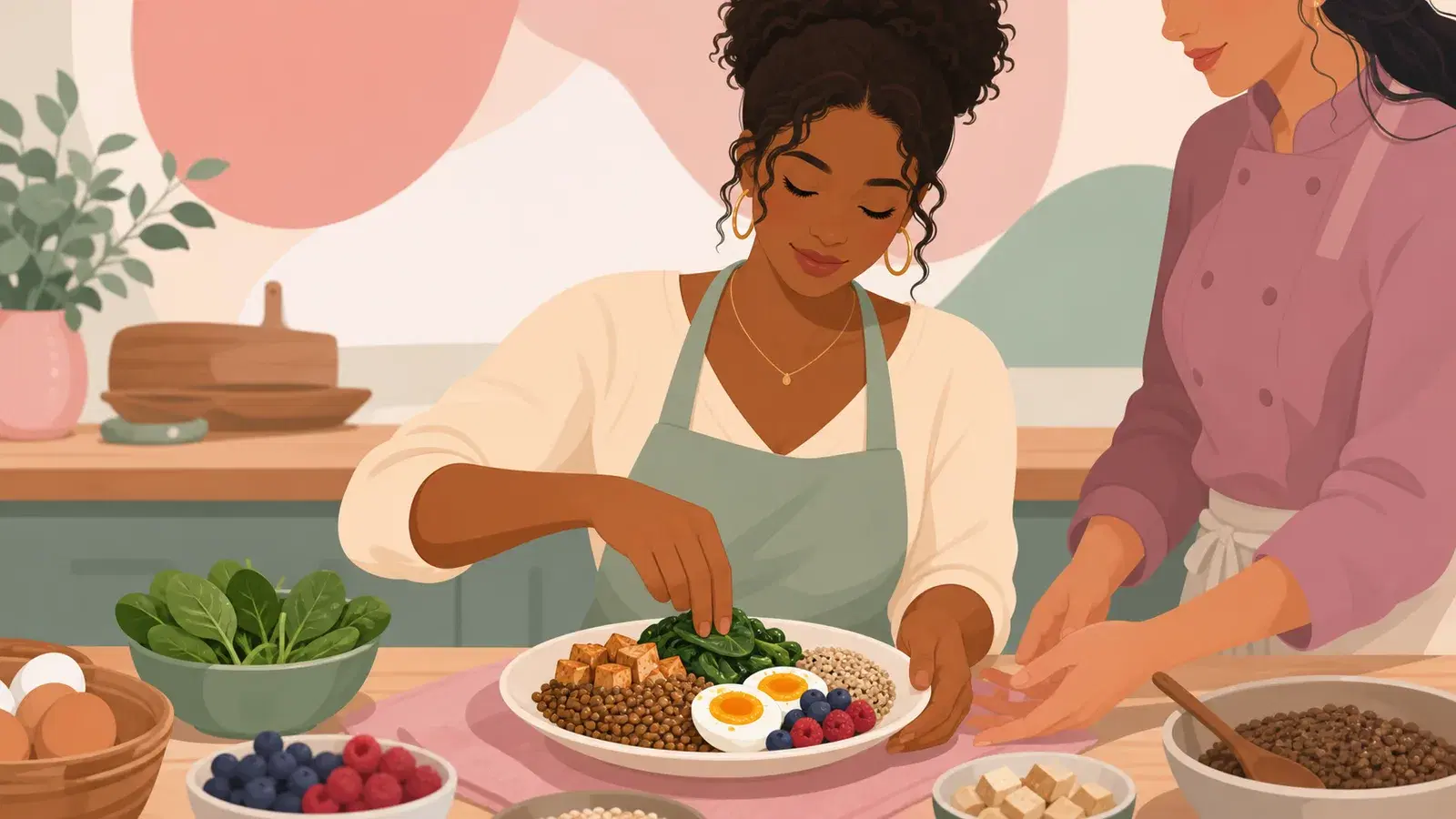
When appetite increases before a period, relying only on sweets or refined carbs can make blood sugar swings more noticeable. Adding protein to meals can extend fullness and support steadier energy.
Options include:
- Fish, eggs, chicken, beef, and yogurt
- Tofu, beans, and soy milk
- Nuts and seeds as snacks
Fiber and antioxidant foods: supporting bloating and inflammation
Whole grains, vegetables, fruit, beans, and nuts provide dietary fiber and antioxidant nutrients. They support regular digestion and may help the body manage premenstrual bloating and inflammatory load.
When you feel uncomfortable during your period, choose easier-to-digest forms such as warm soups, porridge, stews, and cooked vegetables instead of forcing large amounts of raw or cold foods.
Do caffeine, salt, and alcohol need to be completely avoided?
Not necessarily. But if you have clear premenstrual anxiety, poor sleep, breast tenderness, or swelling, you can try reducing the following in the week before your period:
- High-salt snacks and heavy takeout
- Large amounts of caffeine
- Alcohol
Observe for two cycles and see whether symptoms change.
References
- Physical activity and your menstrual cycleOffice on Women's Health
- Healthy weight, nutrition and physical activityCenters for Disease Control and Prevention
- Iron fact sheet for consumersNational Institutes of Health Office of Dietary Supplements
Keep learning

Nutrition, Weight & Movement
Should you worry about weight fluctuation around your period?
Understand “Should you worry about weight fluctuation around your period?” with evidence-aware context on personal patterns, the limits of single signals, and when to seek care.
4 min read
Nutrition, Weight & Movement
Why does appetite change before your period?
Understand “Why does appetite change before your period?” with evidence-aware context on personal patterns, the limits of single signals, and when to seek care.
3 min read