
Ovulation body signs: discharge, temperature, and mild pain
Ovulation is when an ovary releases an egg. It often happens about 14 days before the next period, but the exact timing varies by person and by cycle. Compared with dates alone, body signs can help you understand your current phase more clearly.
What to know
- Normal variation exists, but screening and prevention still matter.
- Body signs can offer clues without confirming ovulation or diagnosis.
- Local clinical guidance should shape personal care decisions.
Start with the pattern
Ovulation is when an ovary releases an egg. It often happens about 14 days before the next period, but the exact timing varies by person and by cycle. Compared with dates alone, body signs can help you understand your current phase more clearly.
Use the ideas below as general health context. Your own baseline, symptoms and daily functioning matter more than any single date, score or wearable sample.
Ovulation is not only a calendar prediction
Common ovulation signs include:
- Cervical mucus becomes clearer, wetter, slippery, and stretchy.
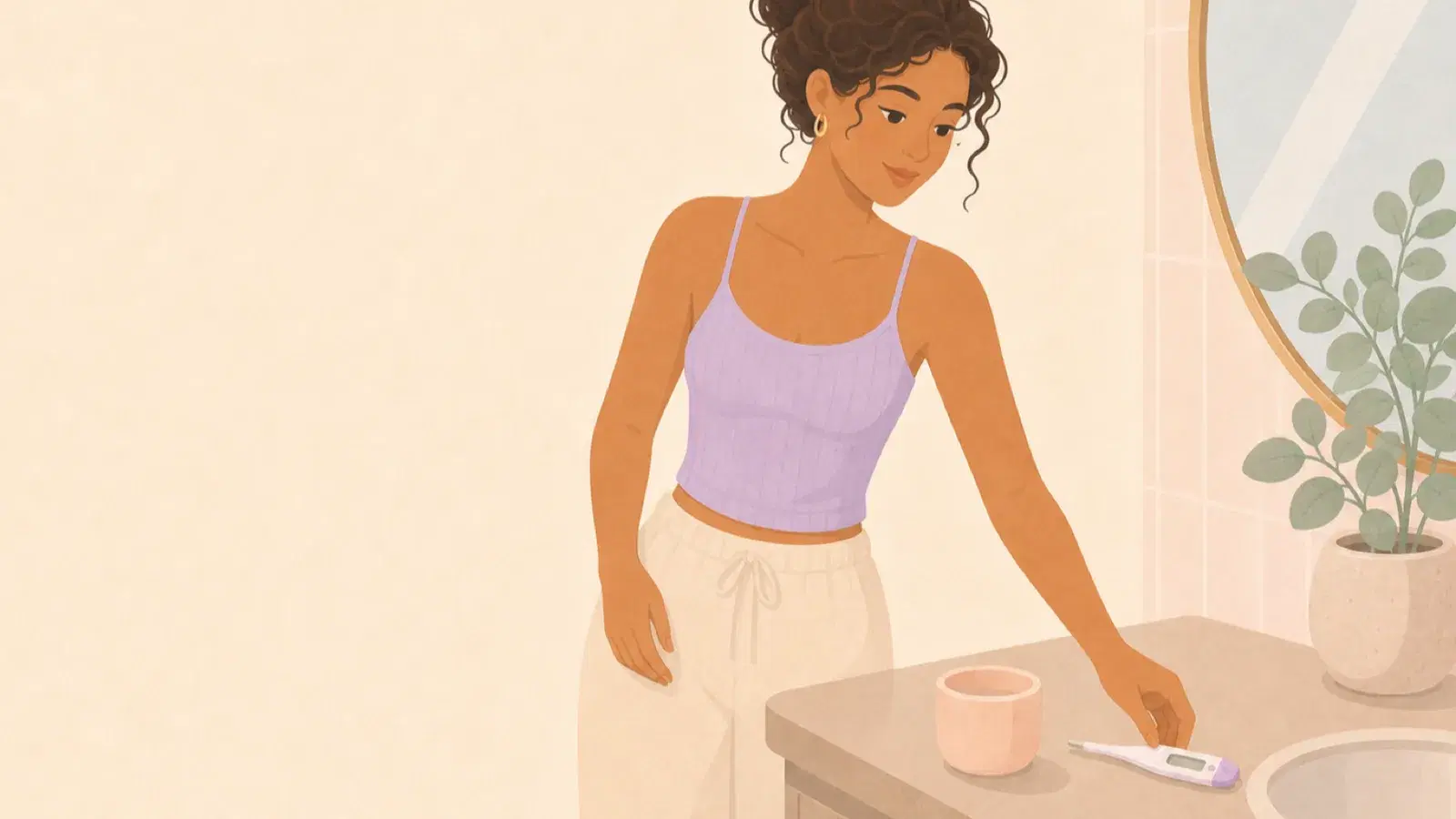
- Basal body temperature rises slightly after ovulation.
- Some people feel mild one-sided lower abdominal pain or heaviness.
- Energy, libido, mood, or social interest may shift slightly.
These signs are not obvious for everyone or every cycle, and they should not be used alone as contraception.
Why discharge becomes heavier and more slippery
As ovulation approaches, estrogen rises. Cervical mucus becomes thinner, wetter, and stretchier, helping sperm move through the cervix more easily. This discharge is usually clear or white, without a strong odor, and does not come with itching or burning.
If discharge also has a strong odor, unusual color, vulvar itching, or pain, do not assume it is only ovulation.

When mild ovulation pain needs attention
Brief, mild one-sided lower abdominal pain may be related to ovulation and can last from minutes to one or two days. But it is worth talking with a clinician if:
- Pain is severe or suddenly worse.
- Pain continues without easing.
- It comes with fever, vomiting, abnormal bleeding, or clear pelvic discomfort.
- It affects life every cycle.
These situations may need evaluation for ovarian cysts, pelvic inflammatory disease, endometriosis, or other causes.
How to observe ovulation more reliably
Look at several signals together:
- Period start and end dates
- Cervical mucus texture
- Basal body temperature or wrist temperature trend
- Ovulation test results
- Lower abdominal pain, mood, energy, and sleep changes
FlowHer's value is not to label one day as absolute "ovulation," but to help you place multiple body signals into the rhythm of the same cycle.
References
- Reducing risk for cervical cancerCenters for Disease Control and Prevention
- Cervical cancer screeningAmerican College of Obstetricians and Gynecologists
- Vulvovaginal healthAmerican College of Obstetricians and Gynecologists
- Your menstrual cycleOffice on Women's Health
Keep learning

Reproductive Health & Care
HPV vaccine and cervical screening: what you need to know
Understand “HPV vaccine and cervical screening: what you need to know” with evidence-aware context on personal patterns, the limits of single signals, and when to seek care.
3 min read
Reproductive Health & Care
Vaginal discharge and intimate care: what changes are normal?
Understand “Vaginal discharge and intimate care: what changes are normal?” with evidence-aware context on personal patterns, the limits of single signals, and when to seek care.
3 min read