
Are oily hair, shedding, and the menstrual cycle related?
Some people notice oilier scalp, flatter hair, or more shedding after a period of high stress or poor sleep. Hair and scalp state can be influenced by hormones, stress, sleep, nutrition, illness, medications, and hair care habits.
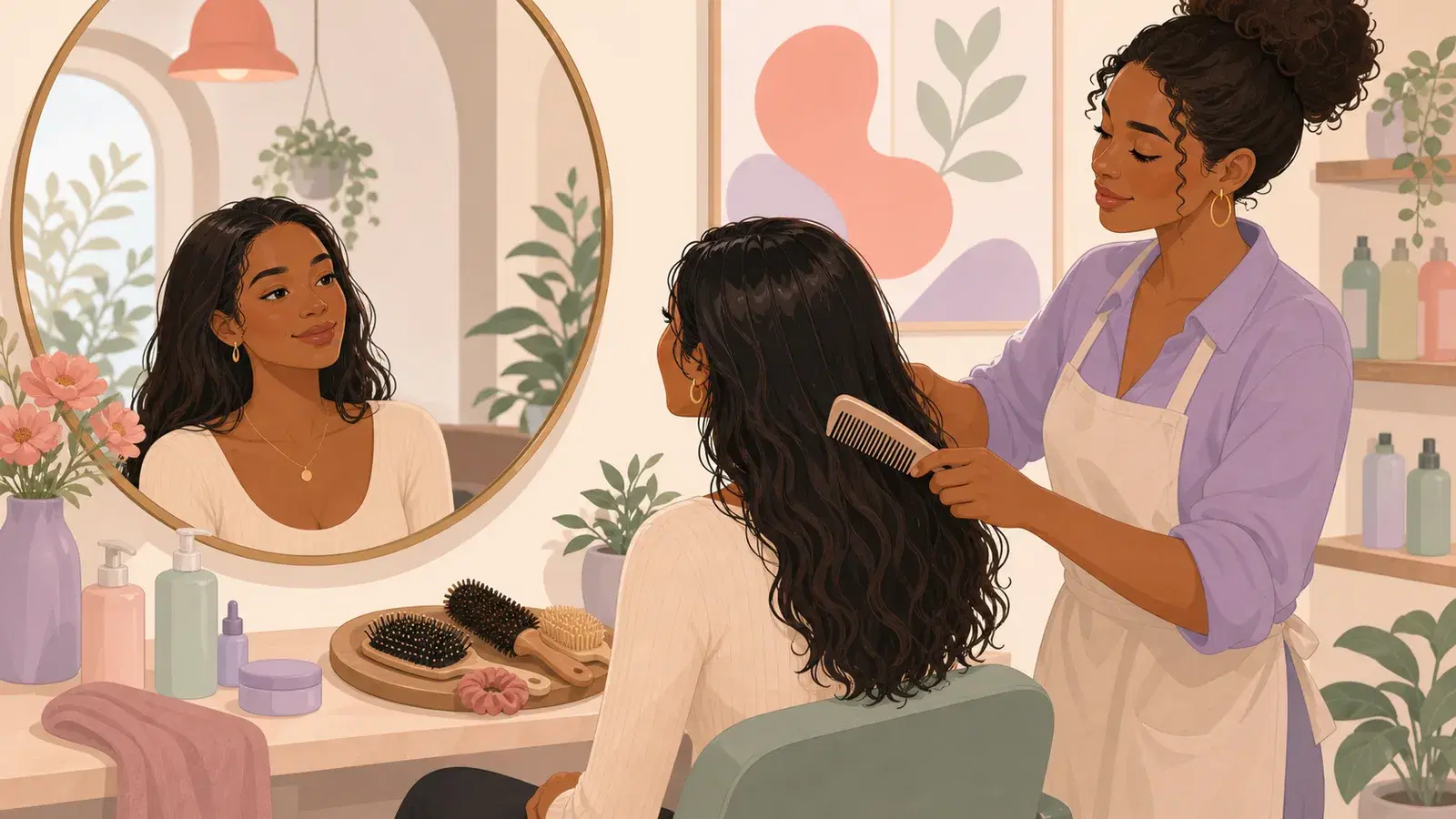
What to know
- Cycle timing can add context but does not explain every change.
- Track what is new, persistent or different from your baseline.
- Concerning or worsening symptoms deserve professional assessment.
Start with the pattern
Some people notice oilier scalp, flatter hair, or more shedding after a period of high stress or poor sleep. Hair and scalp state can be influenced by hormones, stress, sleep, nutrition, illness, medications, and hair care habits.
Use the ideas below as general health context. Your own baseline, symptoms and daily functioning matter more than any single date, score or wearable sample.
Scalp and hair are affected by recovery too
Short-term oiliness is often related to sebum production, washing habits, and hormone fluctuation. Shedding needs to be separated into "normal shedding that feels increased" versus a true hair loss problem.
Why stress-related shedding can appear later
High stress, illness, rapid weight loss, postpartum changes, surgery, nutritional deficiency, and similar triggers may push more hair follicles into the resting phase. A few months later, shedding may suddenly increase while washing or brushing. This is often called telogen effluvium.
Stress-related shedding is often reversible, but the trigger needs to be found and improved. If shedding is sudden, patchy, or continues for several months, see a doctor or dermatologist.
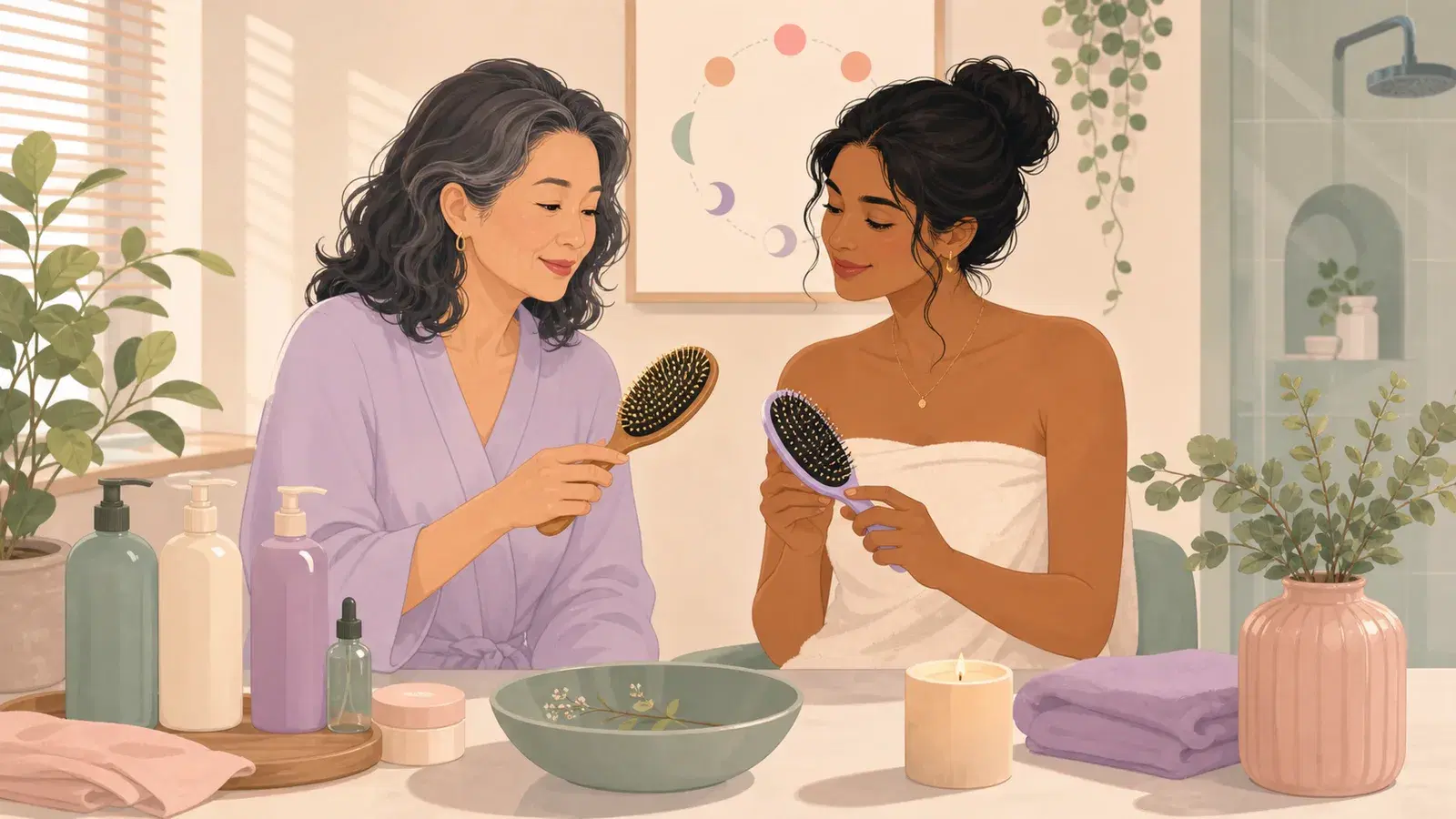
What to do for premenstrual oiliness
You can try:
- Record whether scalp oiliness worsens before your period or during high-stress phases.
- Use a gentle shampoo that suits your scalp, avoiding over-cleansing that irritates the scalp.
- Wash the scalp after exercise or heavy sweating.
- Protect protein, iron, zinc, and overall nutrition intake.
- Reduce late nights and high stress stacking before your period.
When to seek care
Consider seeing a doctor or dermatologist if:
- Hair loss is sudden or patchy.
- The scalp is red, swollen, painful, crusted, or very itchy.
- Shedding continues for several months without improvement.
- Hair changes come with clear menstrual irregularity, acne, increased body hair, or weight change.
References
- Premenstrual syndromeOffice on Women's Health
- Polycystic ovary syndromeOffice on Women's Health
- Your menstrual cycle and your healthOffice on Women's Health
Keep learning

Body Health
Is breast tenderness before your period normal?
Understand “Is breast tenderness before your period normal?” with evidence-aware context on personal patterns, the limits of single signals, and when to seek care.
3 min read
Body Health
Period acne and skin changes: why breakouts happen at the same time
Understand “Period acne and skin changes: why breakouts happen at the same time” with evidence-aware context on personal patterns, the limits of single signals, and when to seek care.
3 min read