
Period acne and skin changes: why breakouts happen at the same time
Many people repeatedly break out in the week before a period or around menstruation, especially on the chin, jawline, around the mouth, cheeks, chest, or back. Cycle-related acne is usually linked to hormone effects on oil production, not simply insufficient cleansing.
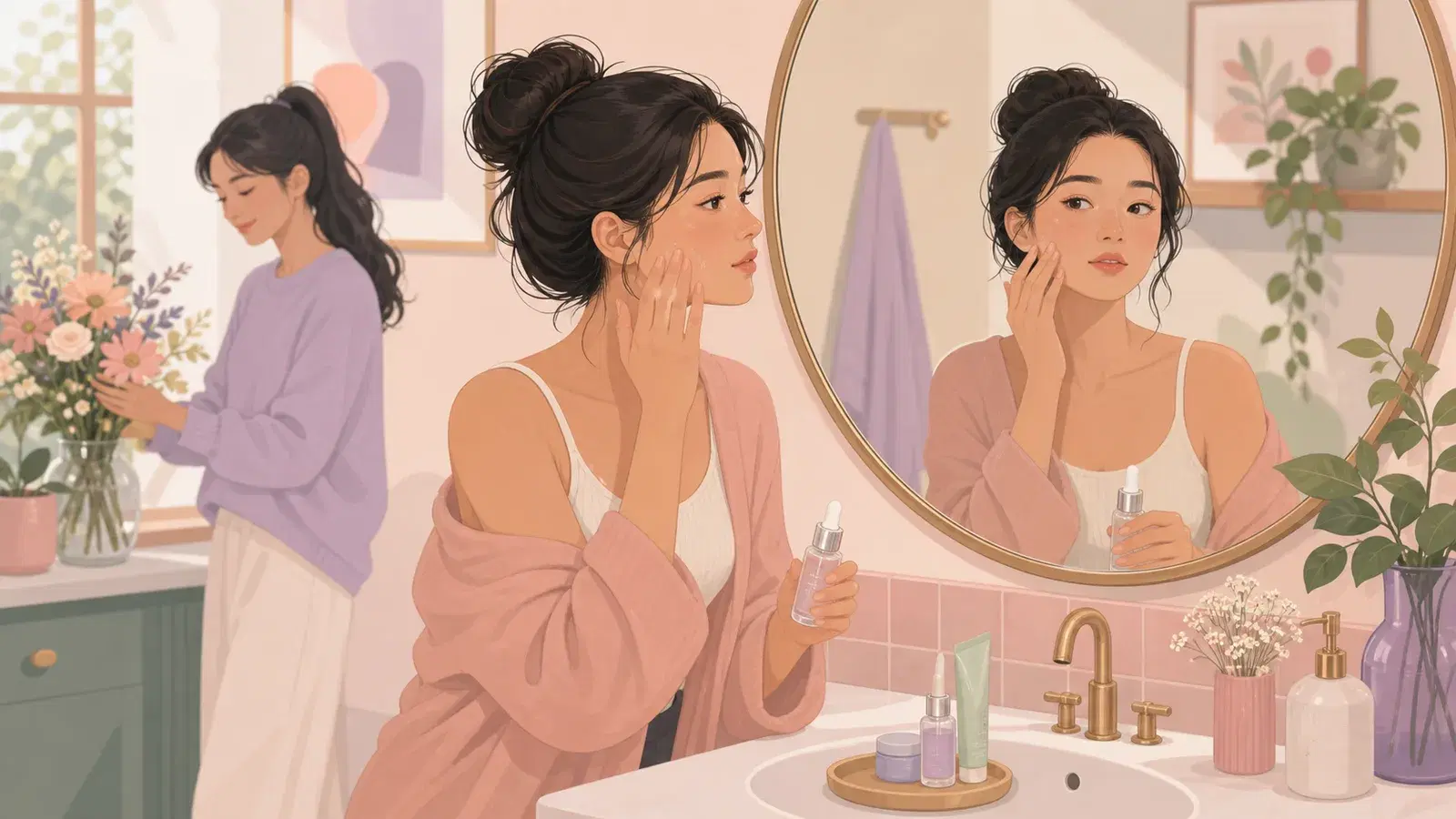
What to know
- Cycle timing can add context but does not explain every change.
- Track what is new, persistent or different from your baseline.
- Concerning or worsening symptoms deserve professional assessment.
Start with the pattern
Many people repeatedly break out in the week before a period or around menstruation, especially on the chin, jawline, around the mouth, cheeks, chest, or back. Cycle-related acne is usually linked to hormone effects on oil production, not simply insufficient cleansing.
Use the ideas below as general health context. Your own baseline, symptoms and daily functioning matter more than any single date, score or wearable sample.
Premenstrual breakouts are not because you are "dirty"
Acne usually involves:
- Increased sebum production
- Hair follicles clogged by oil and dead skin cells
- Bacteria and inflammation
- Added effects from stress, sleep, skin care products, and diet
Why it flares before a period
Across the menstrual cycle, the relative balance of estrogen, progesterone, and androgens changes. Before a period, sebum production may increase, clogged pores and inflammation may become more noticeable, and acne can recur at similar times.
Stress and lack of sleep do not create acne alone, but if you are already acne-prone, they can make inflammation more obvious and recovery slower.

How to care for it
Gentle and consistent care matters more than frequent product changes:
- Use a gentle cleanser and avoid harsh scrubbing.
- Choose non-comedogenic skin care and sunscreen products.
- Do not squeeze deep, painful pimples, which can increase pigmentation and scarring.
- Before your period, protect sleep, reduce high stress, and avoid irritating skin care.
- If you repeatedly get painful cystic acne, scarring, or mood distress from acne, see a dermatologist.
When to check for hormonal issues
If acne comes with obvious menstrual irregularity, increased body hair, hair loss, weight change, or long-term treatment difficulty, consider talking with a clinician to evaluate PCOS, endocrine imbalance, or other causes.
References
- Premenstrual syndromeOffice on Women's Health
- Polycystic ovary syndromeOffice on Women's Health
- Your menstrual cycle and your healthOffice on Women's Health
Keep learning
Body Health
Is breast tenderness before your period normal?
Understand “Is breast tenderness before your period normal?” with evidence-aware context on personal patterns, the limits of single signals, and when to seek care.
3 min read
Body Health
Are oily hair, shedding, and the menstrual cycle related?
Understand “Are oily hair, shedding, and the menstrual cycle related?” with evidence-aware context on personal patterns, the limits of single signals, and when to seek care.
3 min read